HONGXI DESIGN
Curabridge
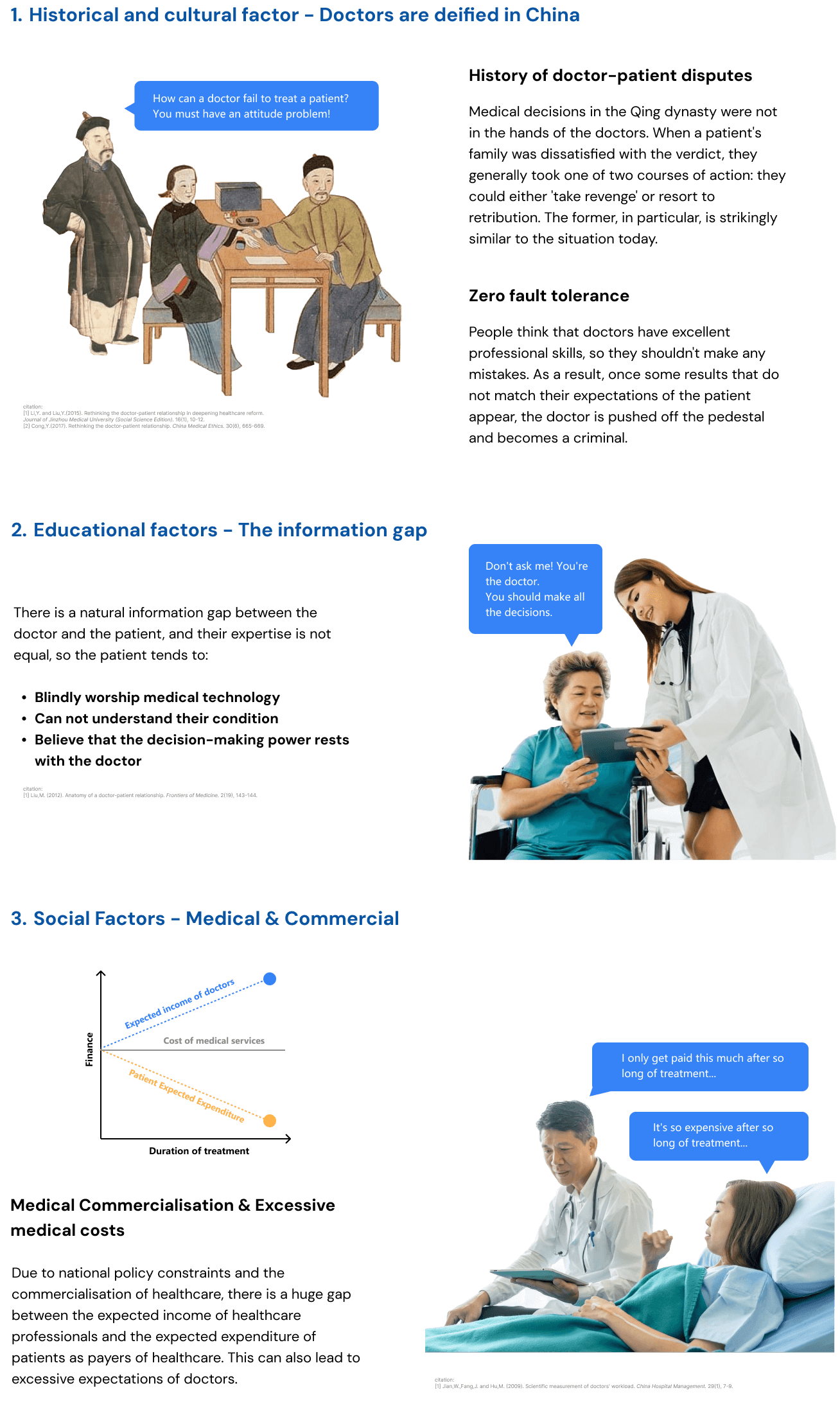
In the context of China's healthcare system, communication problems between patients and doctors often become a trigger for doctor-patient conflicts. This not only leads to trust problems between doctors and patients, but also invariably increases the pressure on social healthcare resources, thus creating a vicious circle.
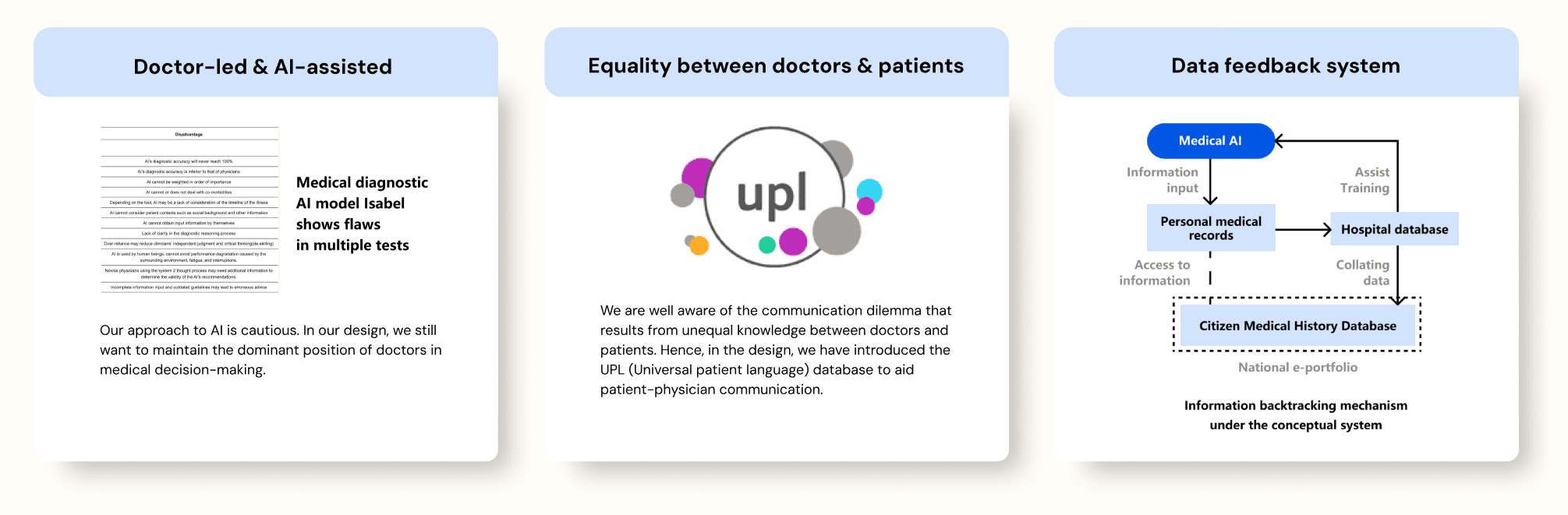
In this project, we design an AI-based healthcare service system to increase the communication efficiency between doctors and patients, reduce unnecessary workload for doctors, improve the trust problem between doctors and patients, and make the healthcare system operate more efficiently by generating and communicating with labelled information.
Date
Mar. - Apr. 2023
Category
AI Tool
System design
UX Design
Skills
AI Healthcare
Other Information
Team Project
Collaborative Project with Shanghai Eastrn Hospital
Why is the relationship between doctors and patients
so tense in China?
The Current Situation of Medical Resources in China
Shanghai as an Example
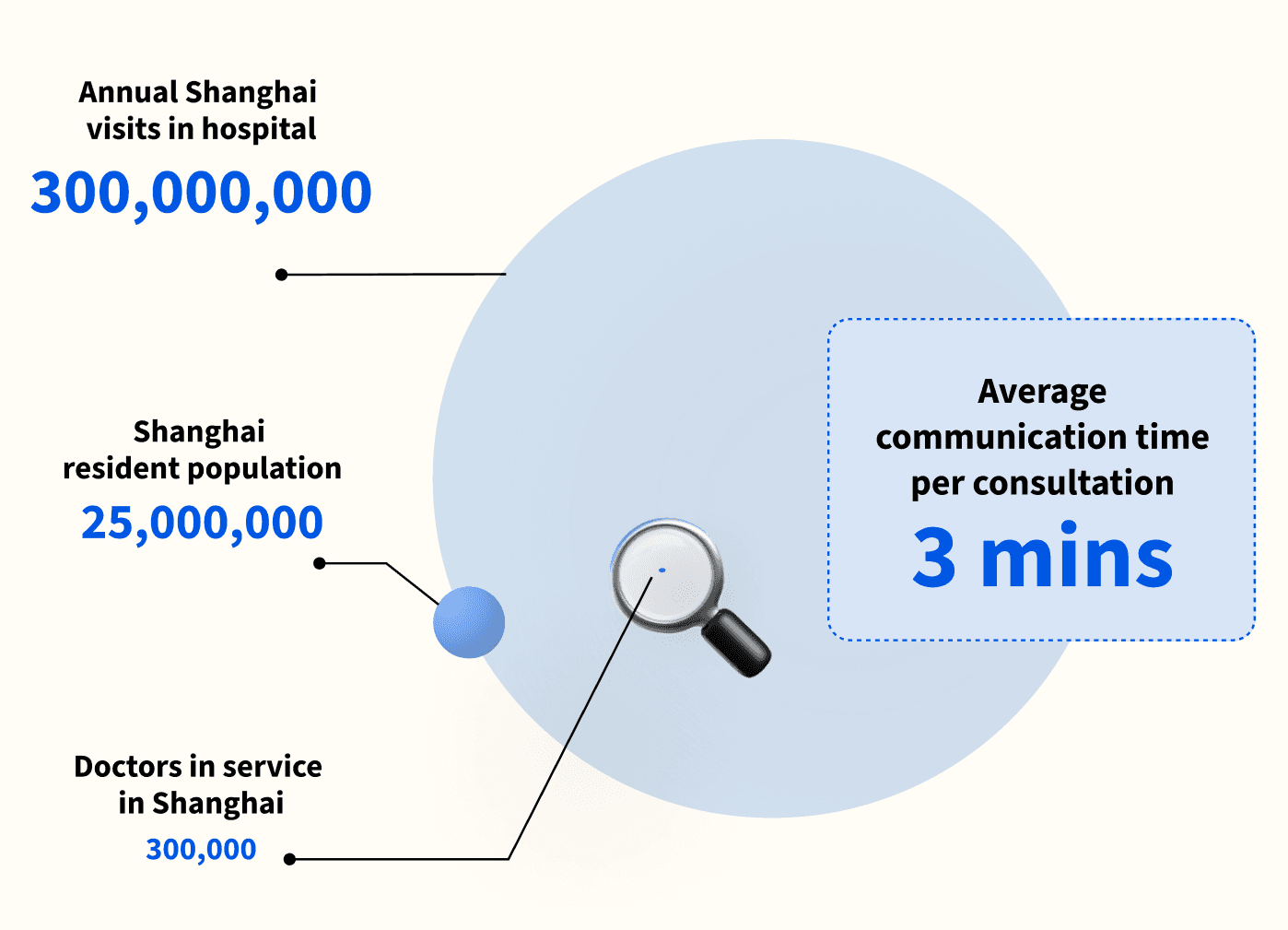
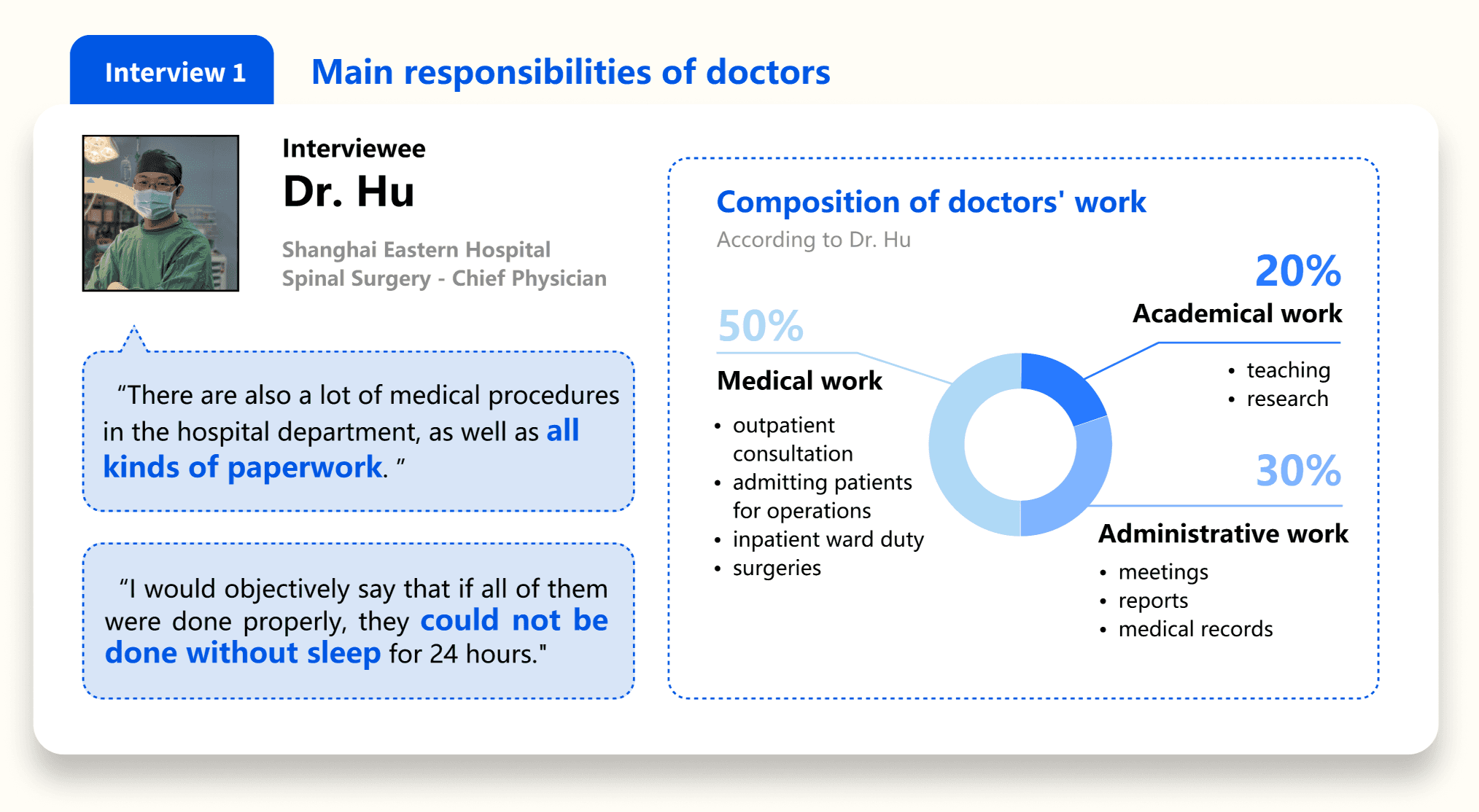
Shanghai, for example, has some of the top medical resources in the country, with more than 300 million consultations per year. At the same time, however, there are only 300,000 doctors working in Shanghai.
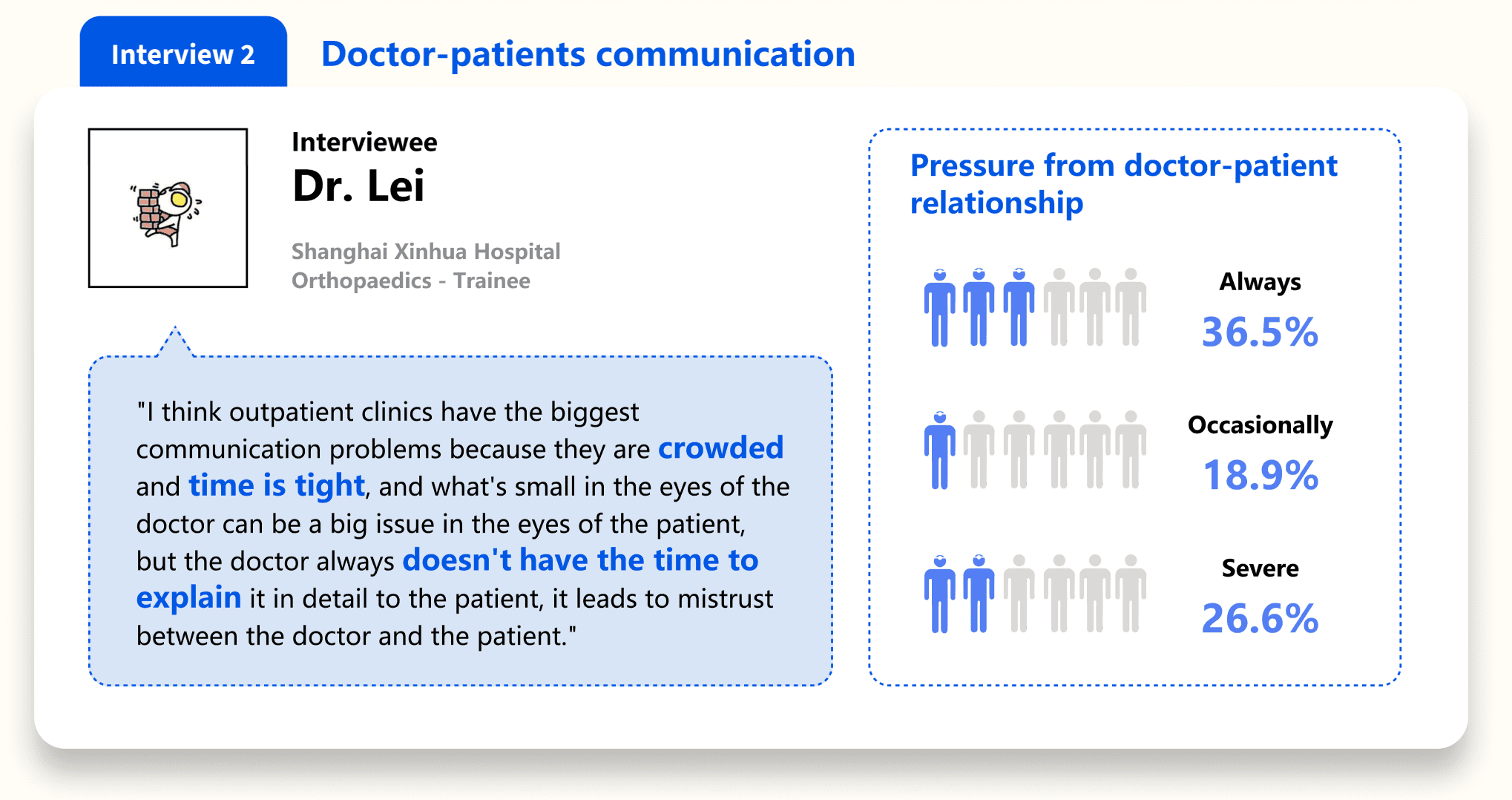
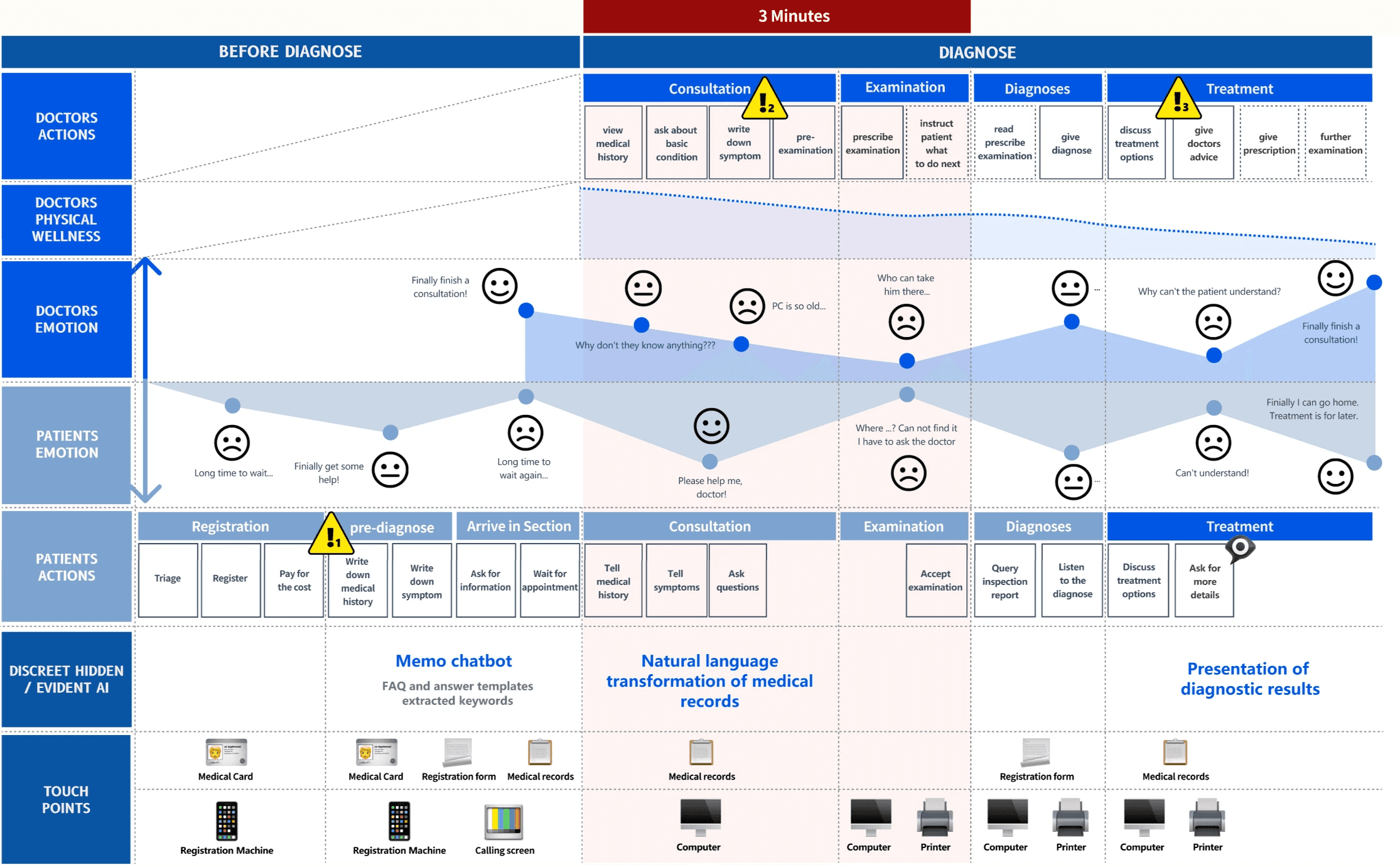
The huge gap between the number of doctors and patients has led to a surge in work pressure on doctors. At the same time, according to the 120 consultations per doctor per day, the average consultation time per patient is only 3 minutes. This limited time for communication also puts pressure on the doctor-patient relationship.
Interview
User Journey Map
Painpoint Analysis

Goal
In the context of our current healthcare system,
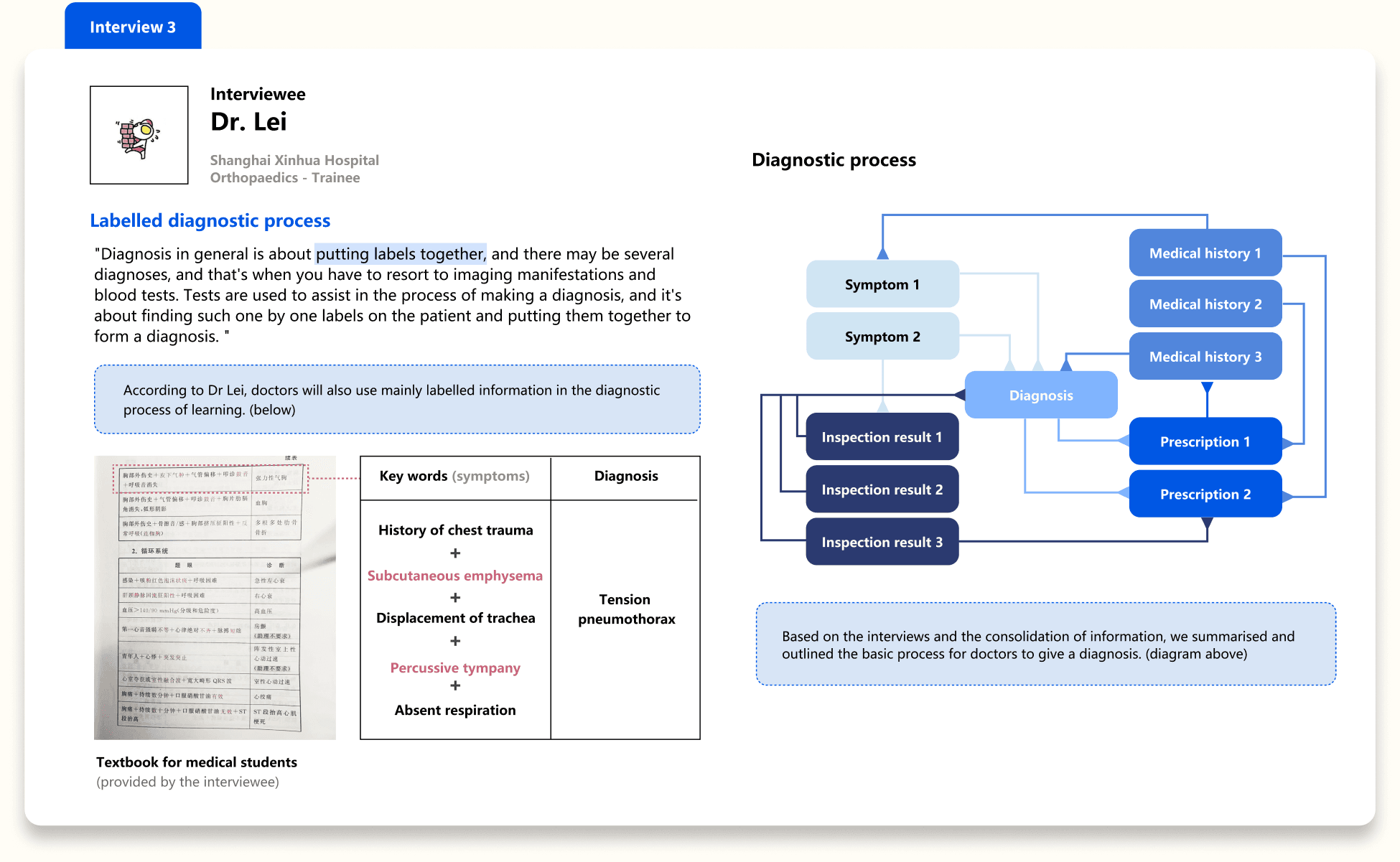
Design with the "three minutes of consultation" as the main touch point
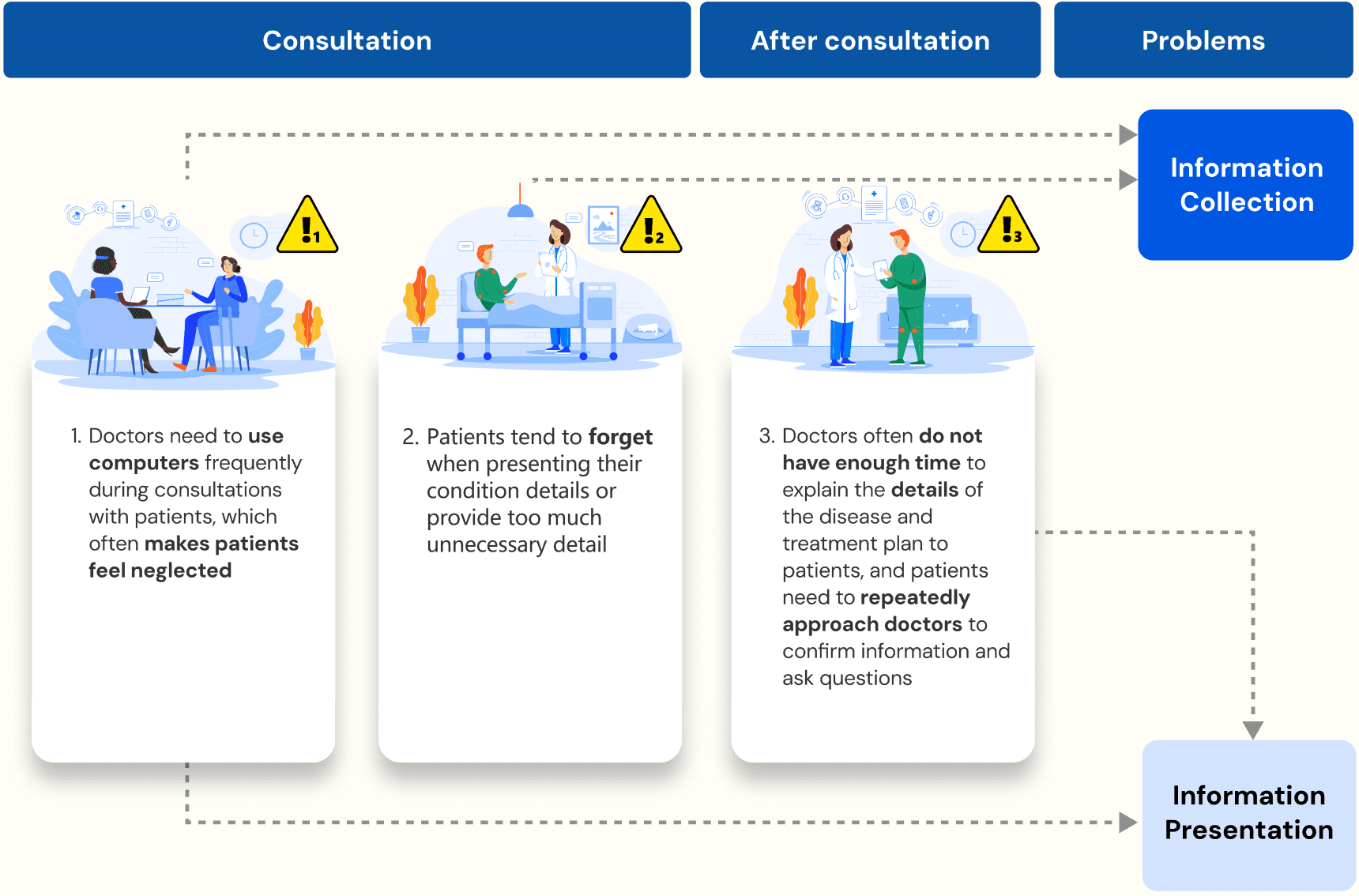
Improve the accuracy and effectiveness of information communication between doctors and patients
Improve communication efficiency and reducing the burden on doctors
Design Solution - Label-based information
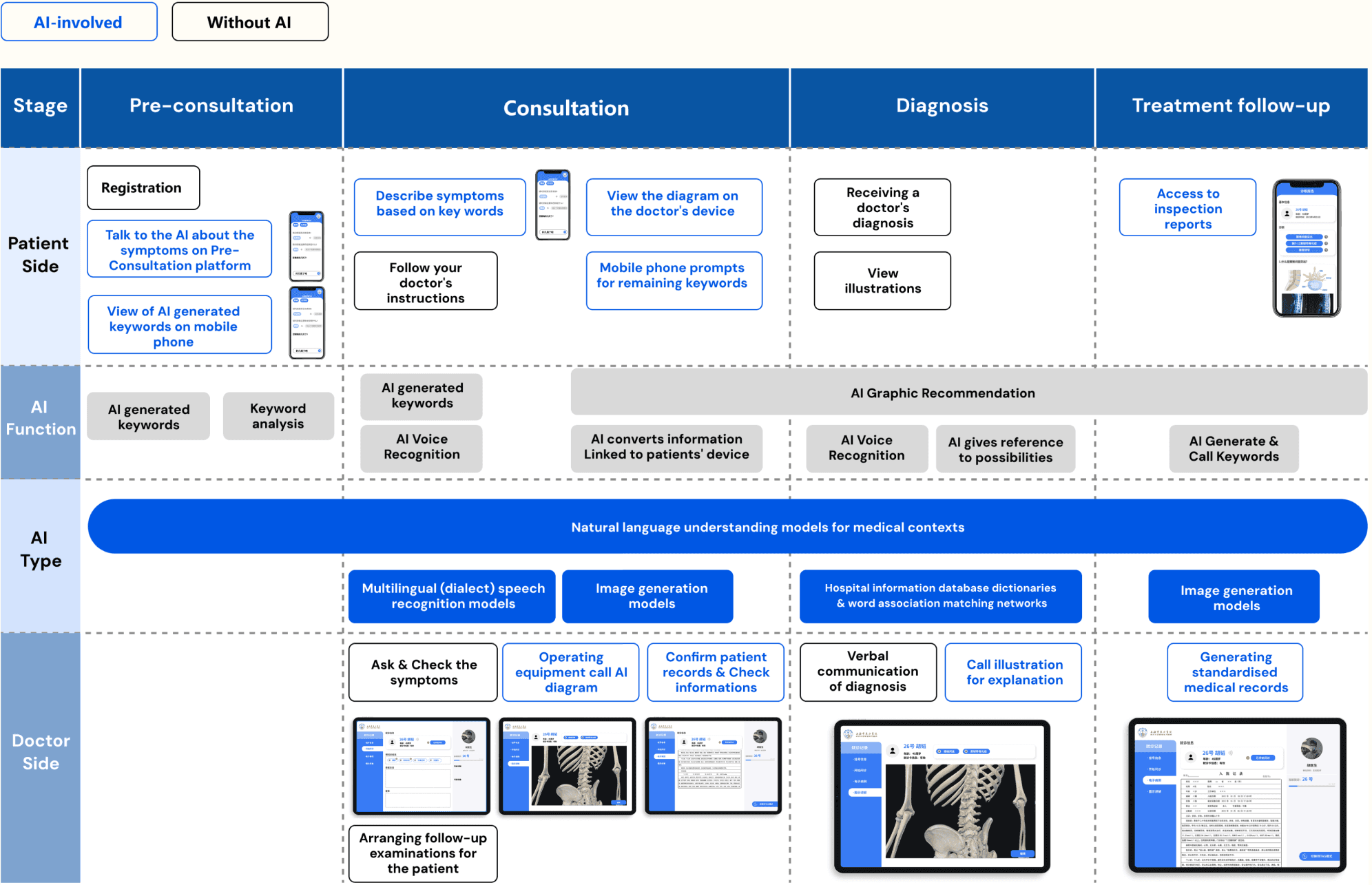
System Map
AI Framework
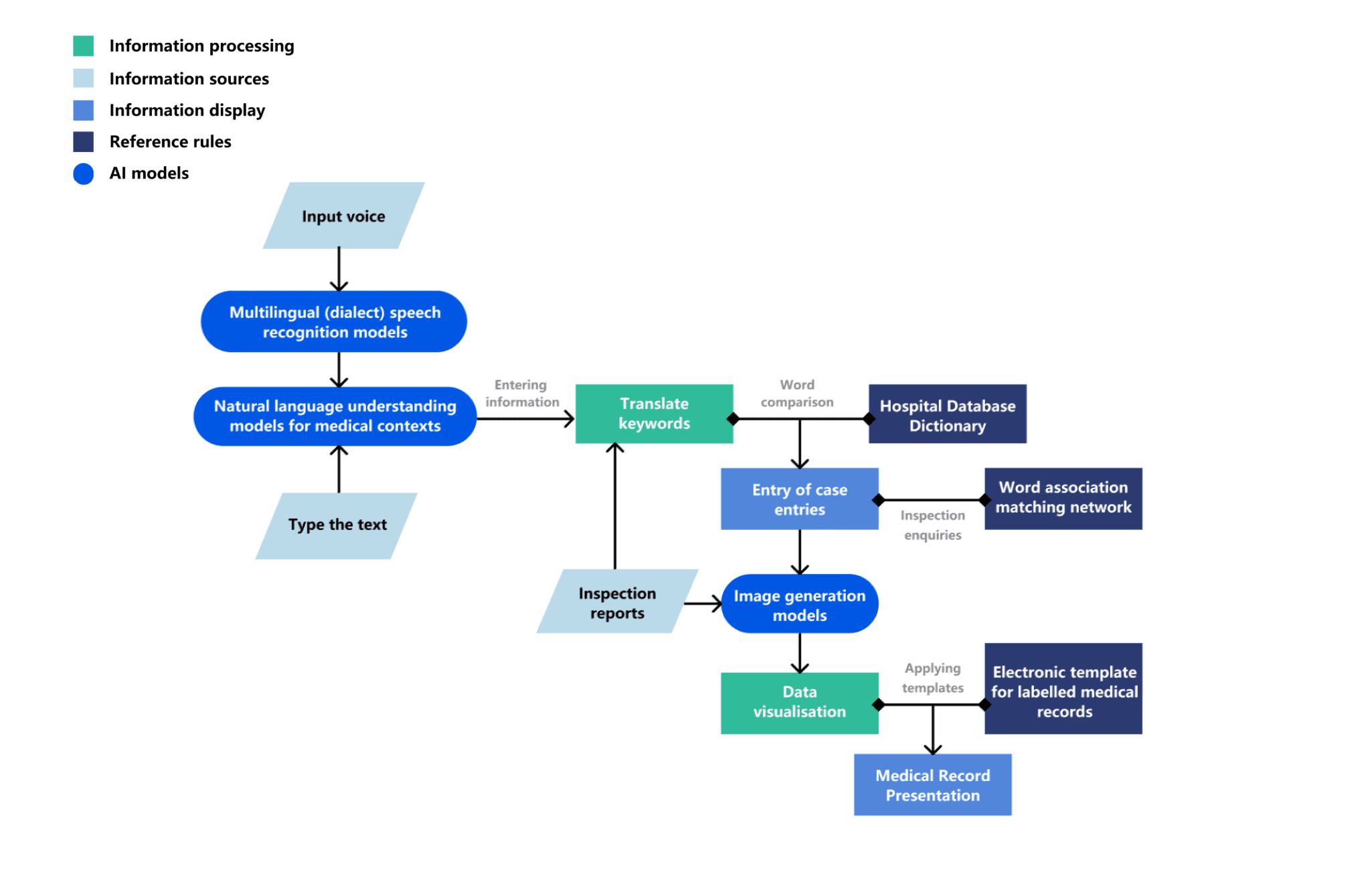
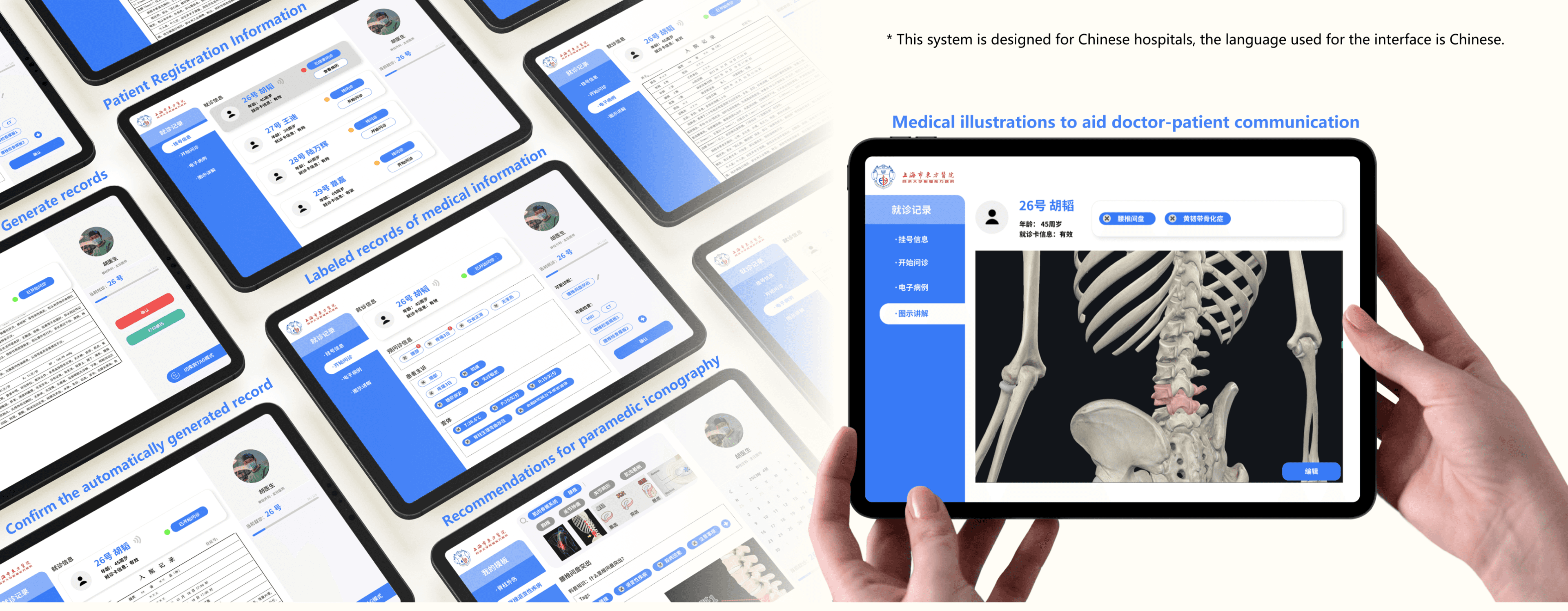
The process starts with data input, which includes voice, text and image test reports. Take voice as an example: the patient's or doctor's expressions will be transformed into keywords by a natural language understanding model specially trained for the healthcare system.
These keywords will be compared with a pre-defined database dictionary to determine availability, and then entered into the medical record based on an association network between the keywords to eliminate conflicting items and optimise them according to a template. When patients need a clear understanding of their situation, the system can generate a patient-oriented medical record based on the case notes.
System Network
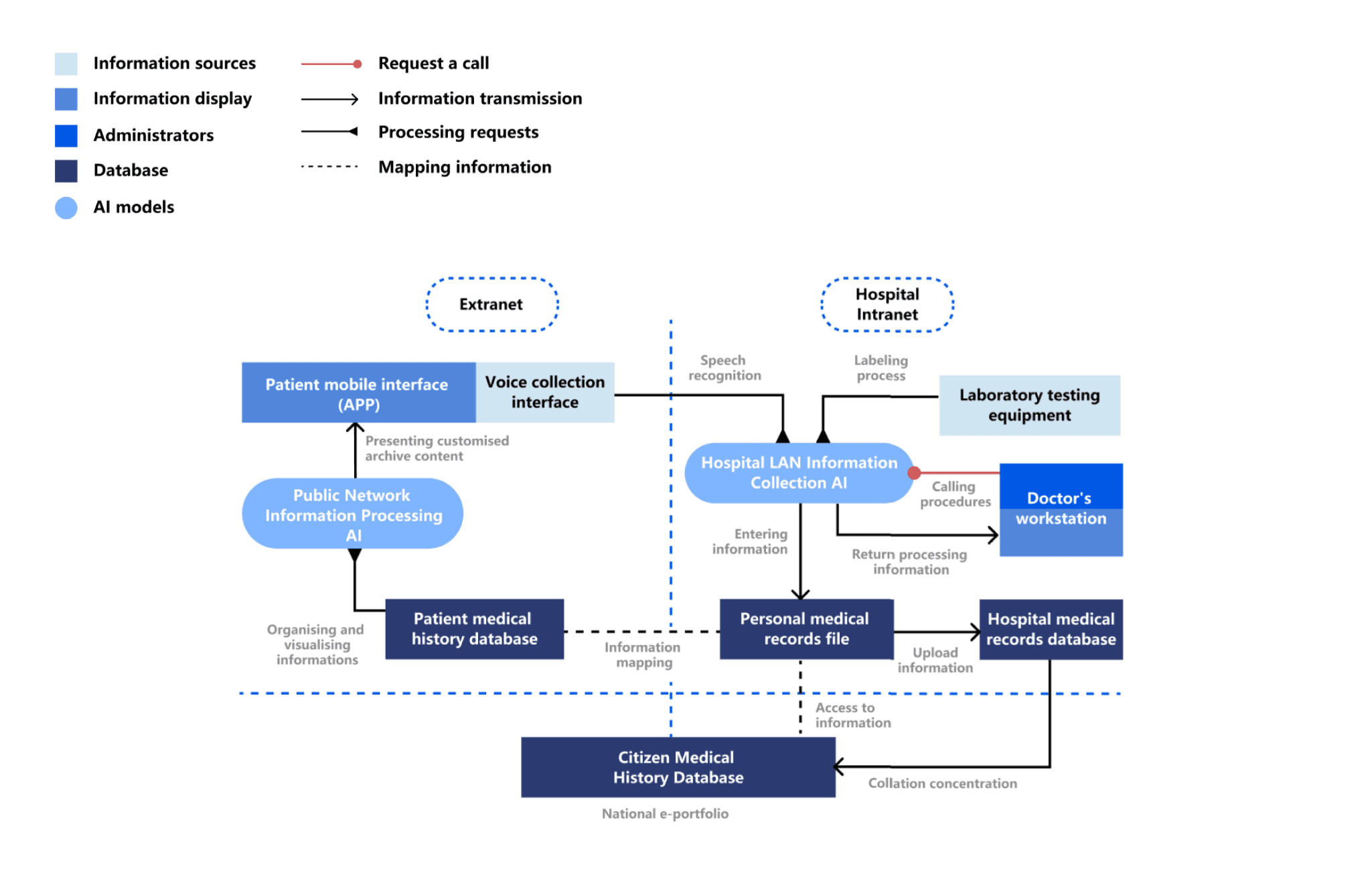
The whole system is divided into two server parts, the hospital intranet and the extranet, in which the hospital carries the LAN AI for receiving and processing patient information input from external interfaces and information generated by the hospital information system.
The intranet builds a unified medical records database and also correlates it with the national citizen's medical history database that may exist to obtain each individual's medical history and past history. The extranet server faces the patient side and is used to process non-confidential information about the patient and to generate a customised medical record file.
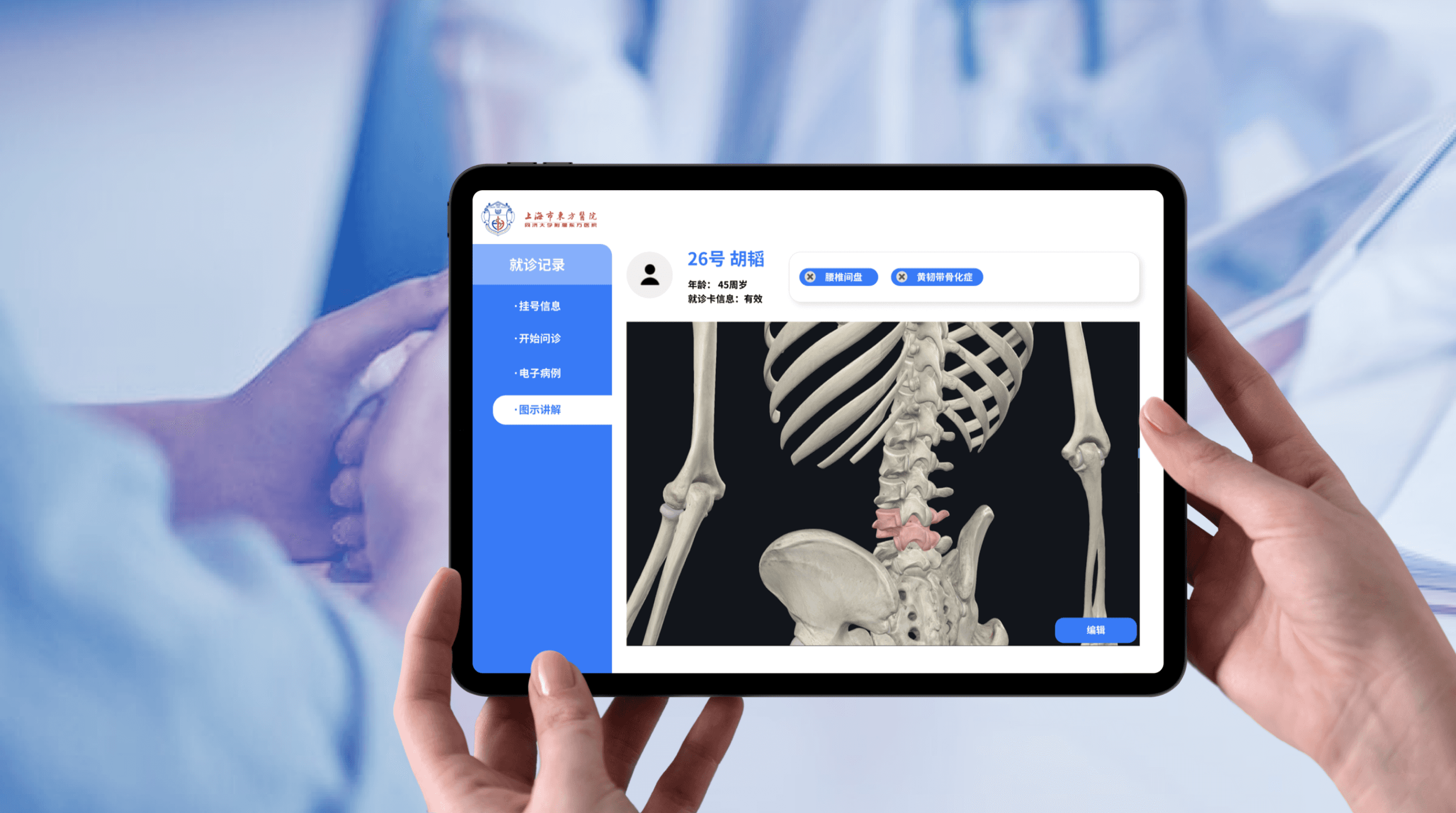
Interface Design
Project Review & Reflections