HONGXI DESIGN
Dior - Carprice
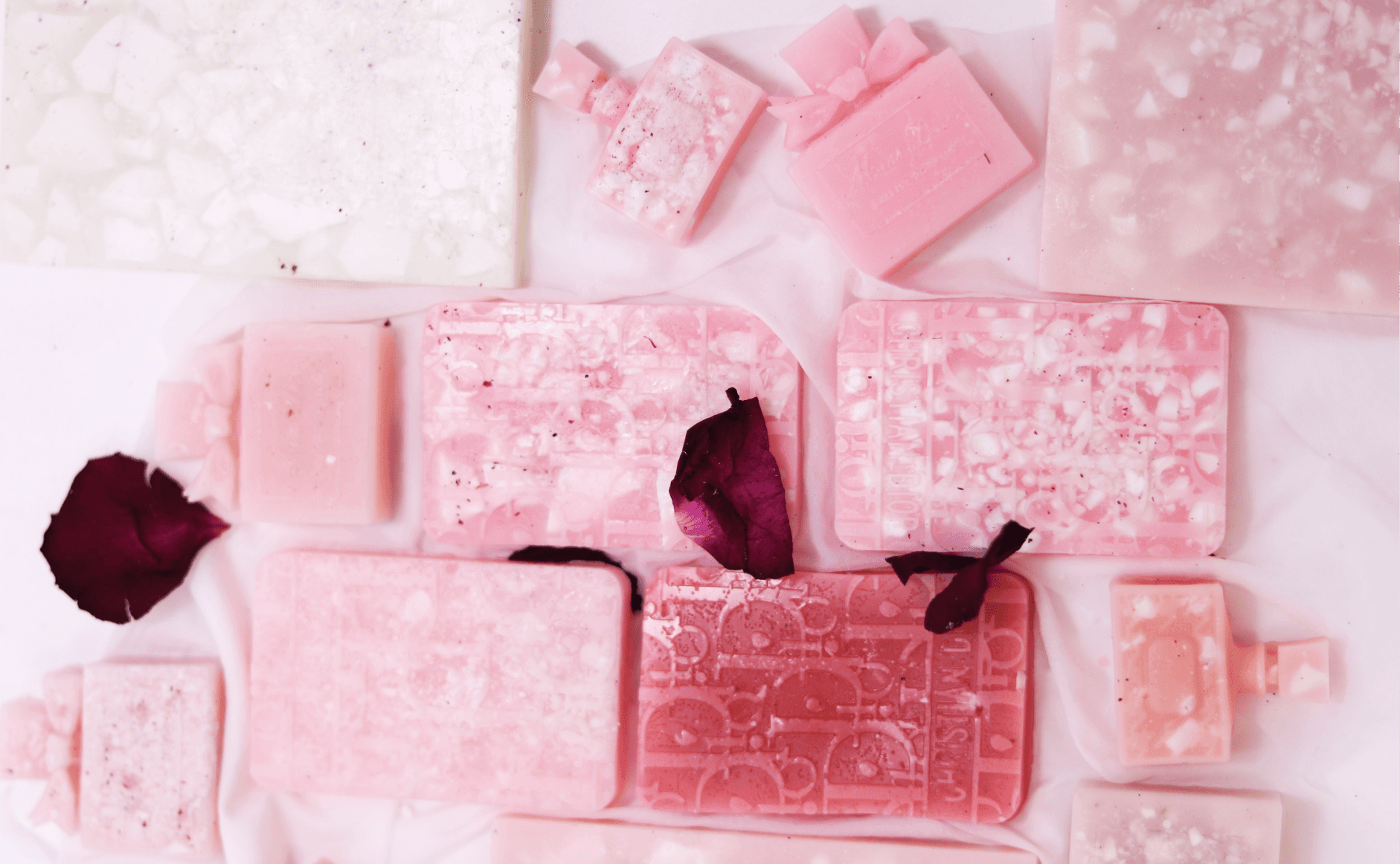
Carprice is a project developed in collaboration with LVMH-Dior that rethinks the end-of-life of luxury home fragrance products by designing a circular material system that transforms waste into a new material language, aligning sustainability with an evolving brand identity.
Date
Apr. - Jun. 2023
Category
Sustainable Beauty
Circular Experience Design
Upcycling Design
Skills
Sustainable
Bio design
Material development
Other Information
Team Project
In collaboration with
LVMH-Dior
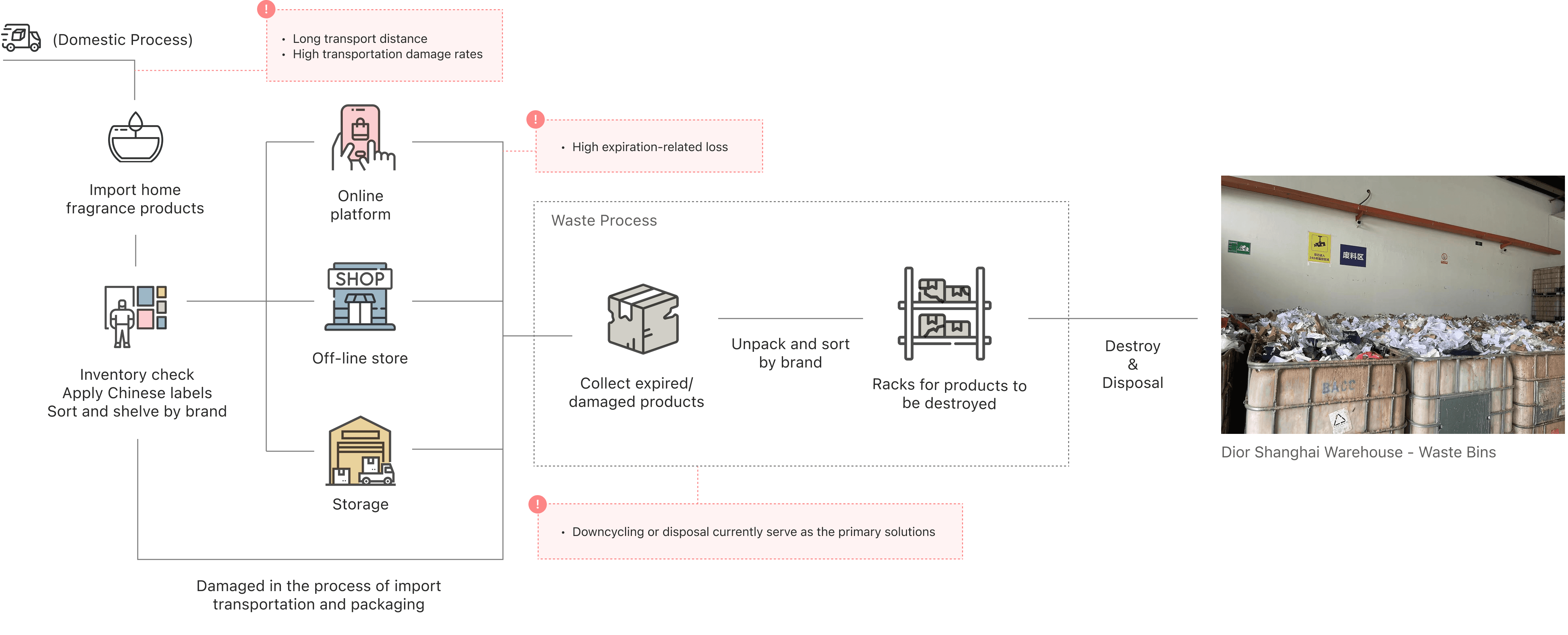
Current System Map - Home Fragrance Products
To gain a deeper understanding of the product lifecycle and its end-of-life conditions, we conducted an in-depth investigation of the existing system of home fragrance products.
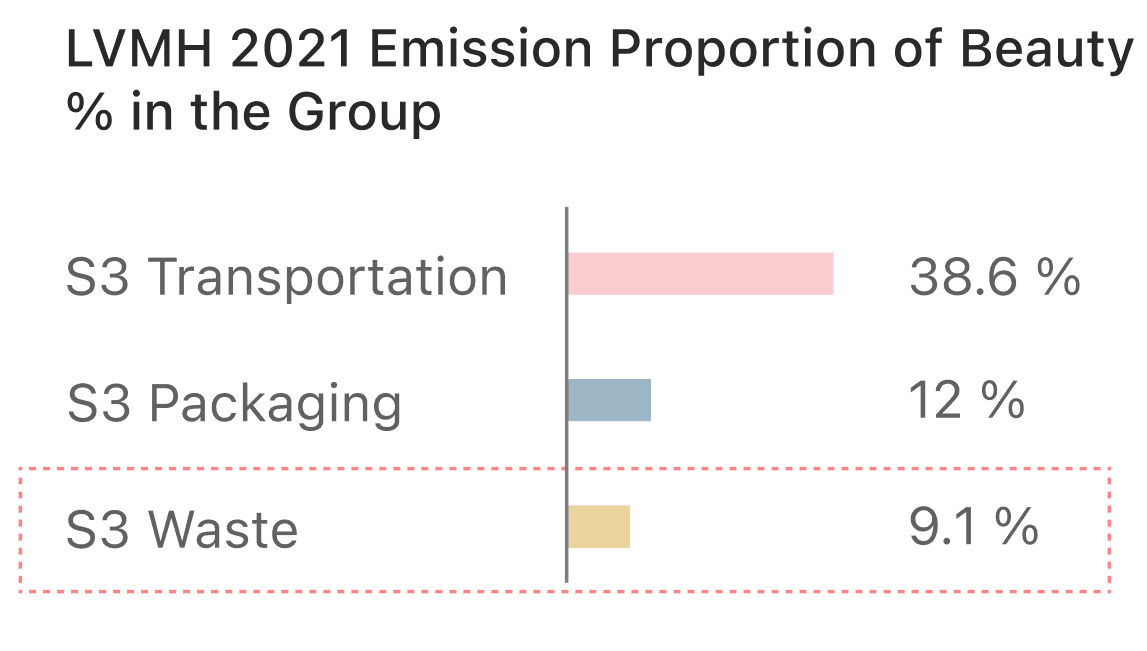
Lack of a dedicated end-of-life strategy
Existing systems primarily focus on production and sales, with limited consideration for post-use or damaged products, leaving end-of-life management outside the brand’s value chain.
Disposal currently serve as the primary solutions
Damaged or expired scented candles are often crushed and sent to landfill or processed through low-value recycling pathways, leading to a loss of material, sensory, and brand value.
Missed opportunities to extend material and emotional value
Current systems overlook the potential of damaged fragrance products to be transformed into new materials, products, or experiences that could reinforce brand identity and user engagement.
System-level Circular experience
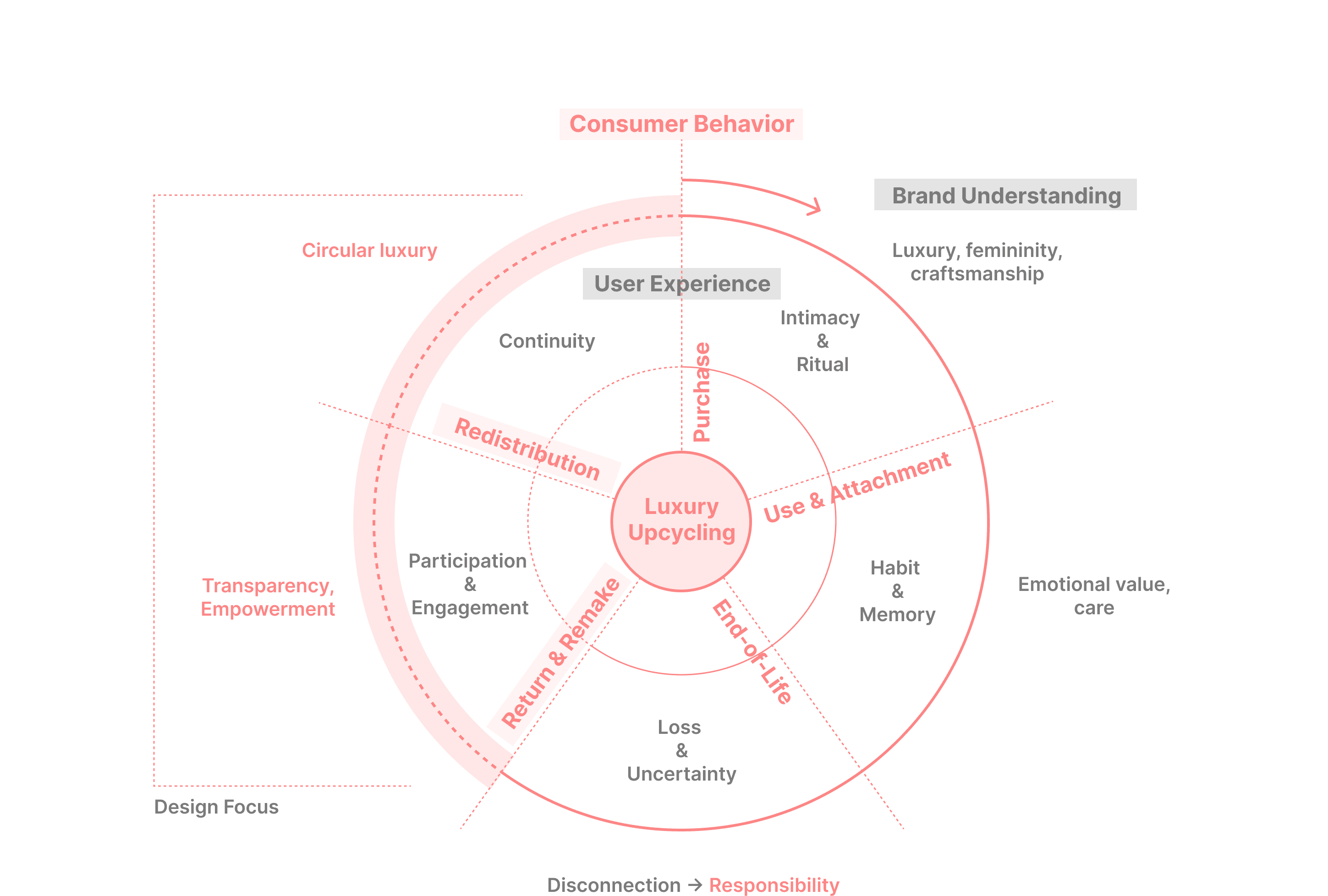
Problem Statement
How might we address high transportation and expiration loss while moving beyond downcycling or disposal, and instead design a circular material system that retains material, sensory, and brand value at the end of a product’s lifecycle?
Life Cycle Assessment - Waste Stage for Upcycling
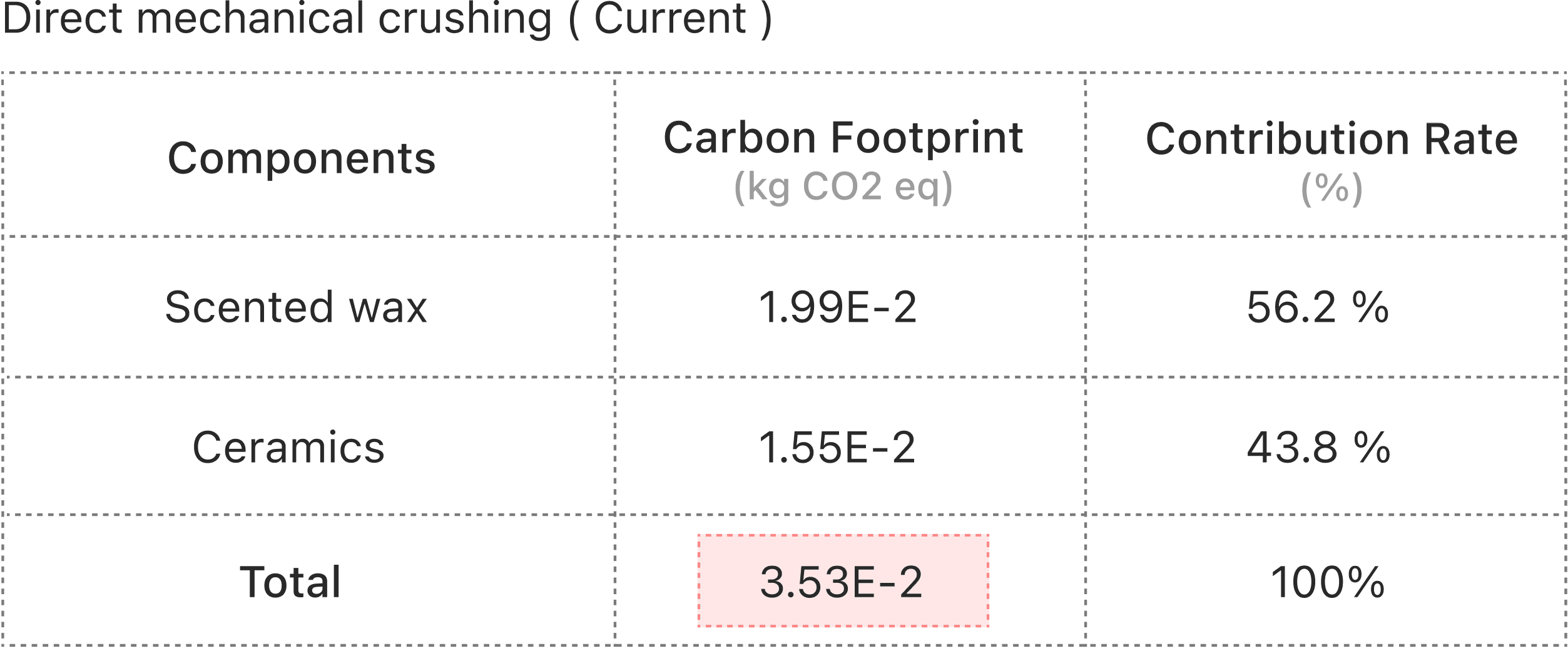
To identify potential upcycling opportunities, we conducted a detailed analysis of the product’s material composition and its existing recycling and disposal pathways. Current end-of-life practices primarily rely on direct crushing of the product as a whole.
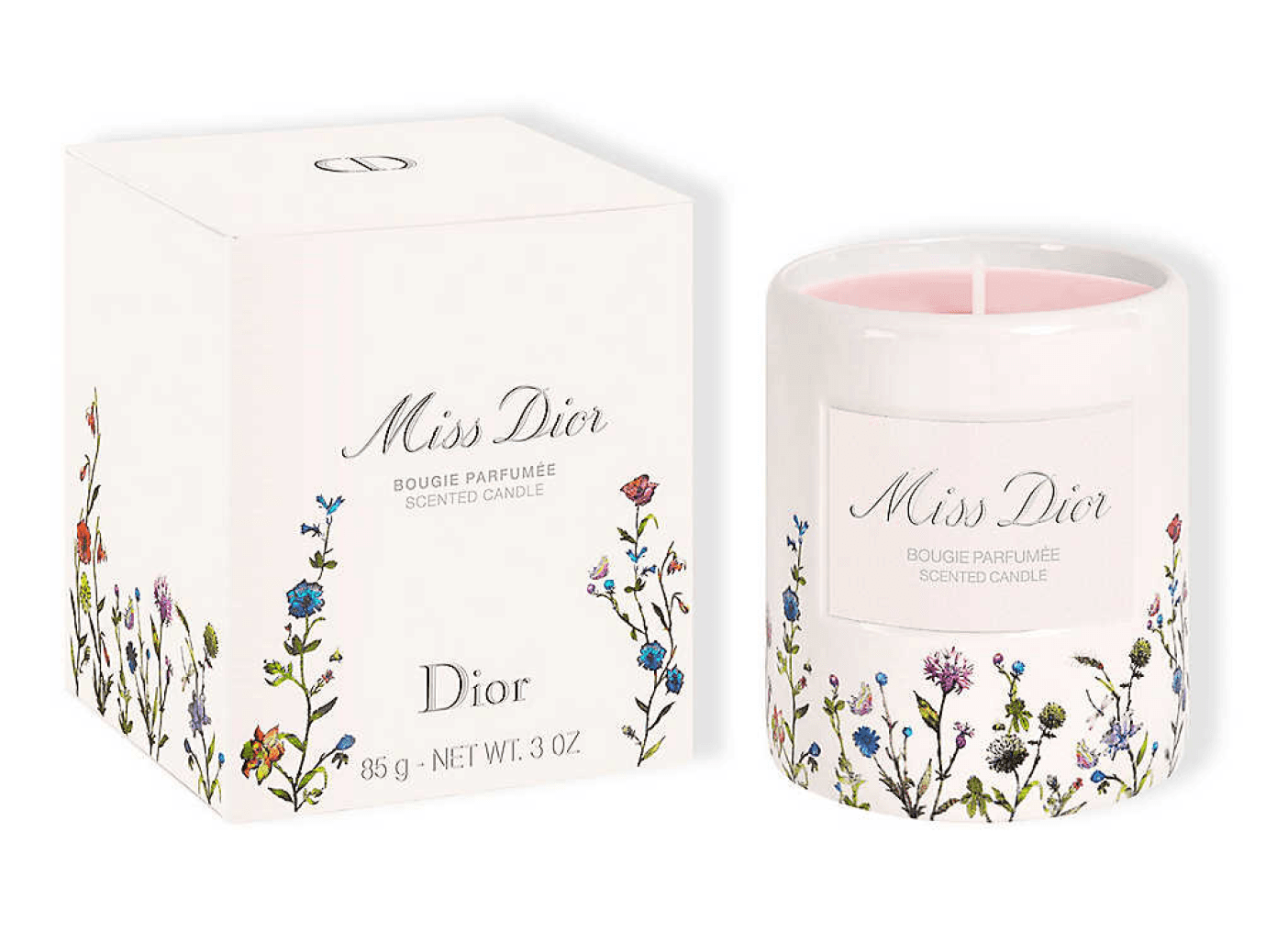
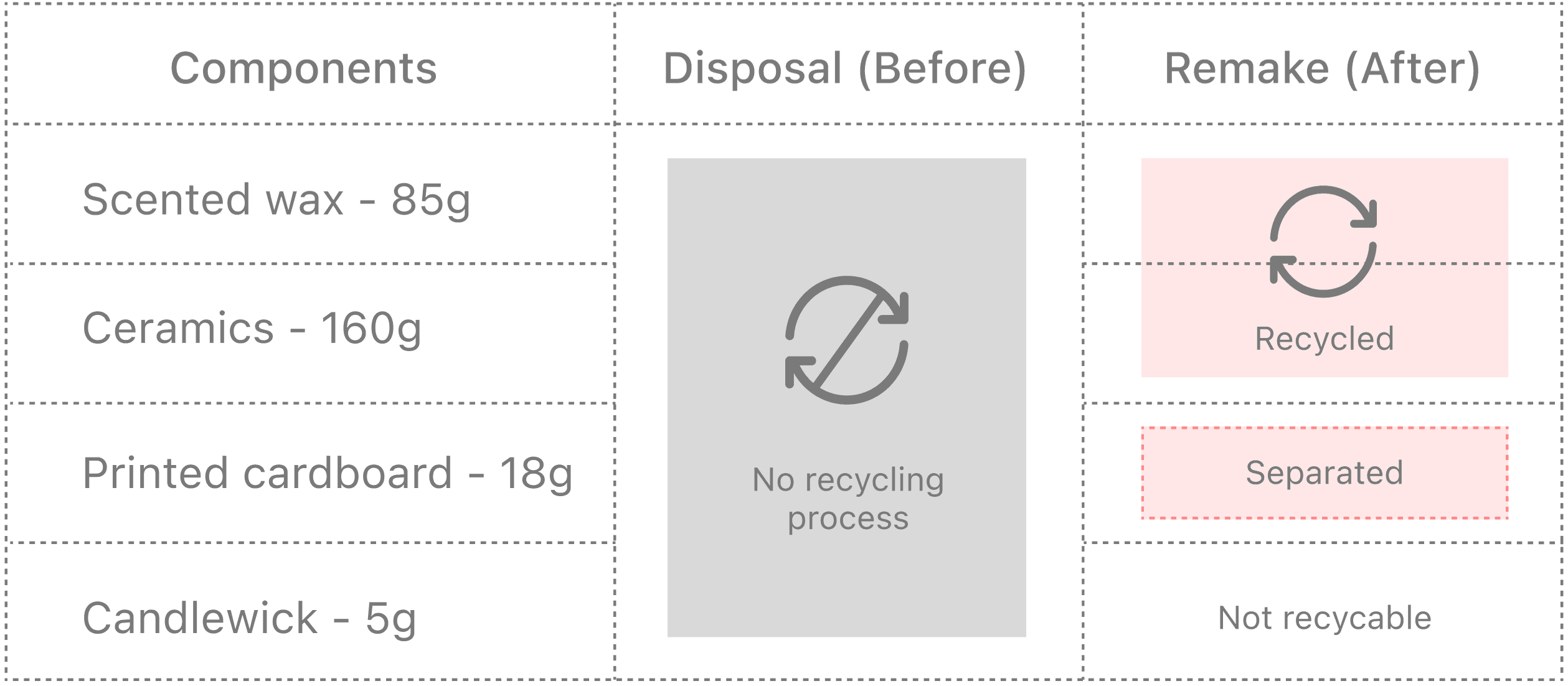
End-of-life carbon footprint
After calculating the carbon footprints of the two end-of-life scenarios, we found that although the heating-first separation approach yields higher-purity recovered materials, it also results in a comparatively higher carbon footprint. As a result, we chose to rely on the current direct crushing pathway to obtain raw materials for subsequent upcycling design.
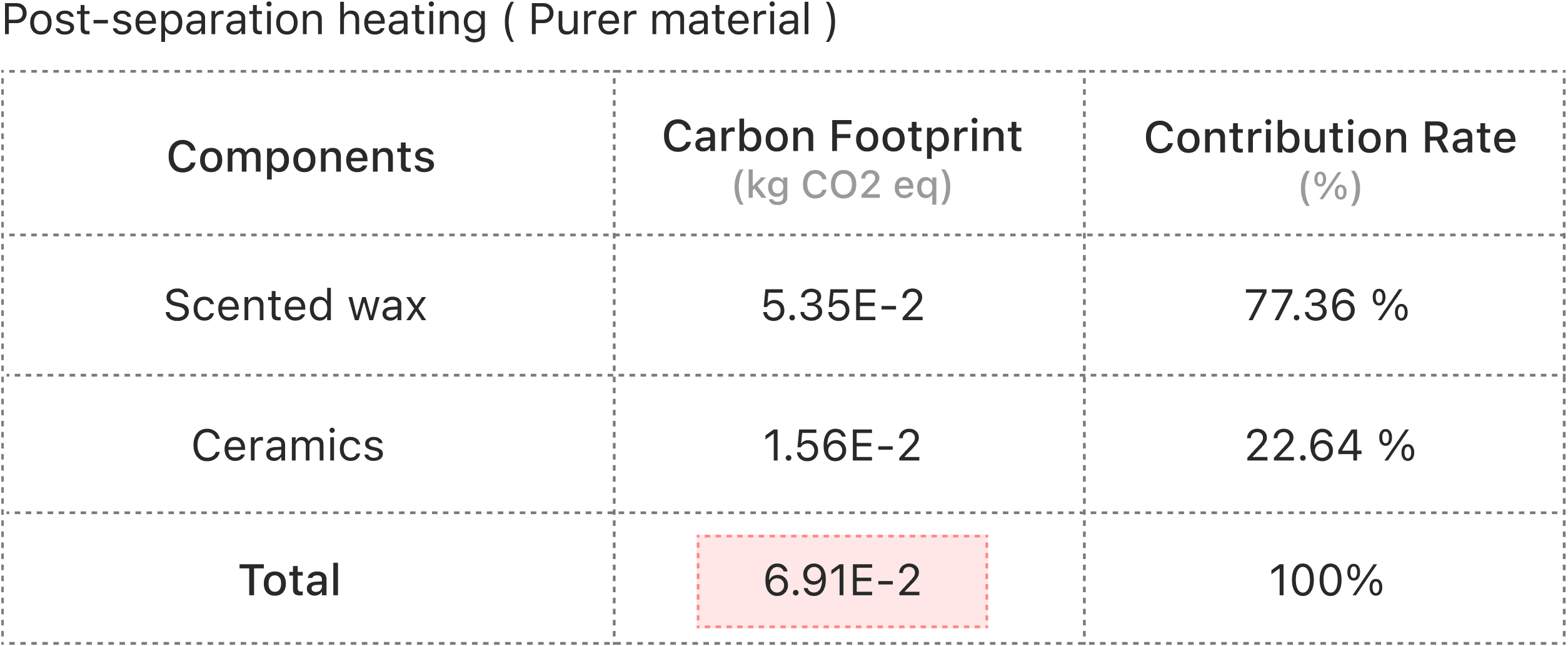
Upcycle Material Experiment
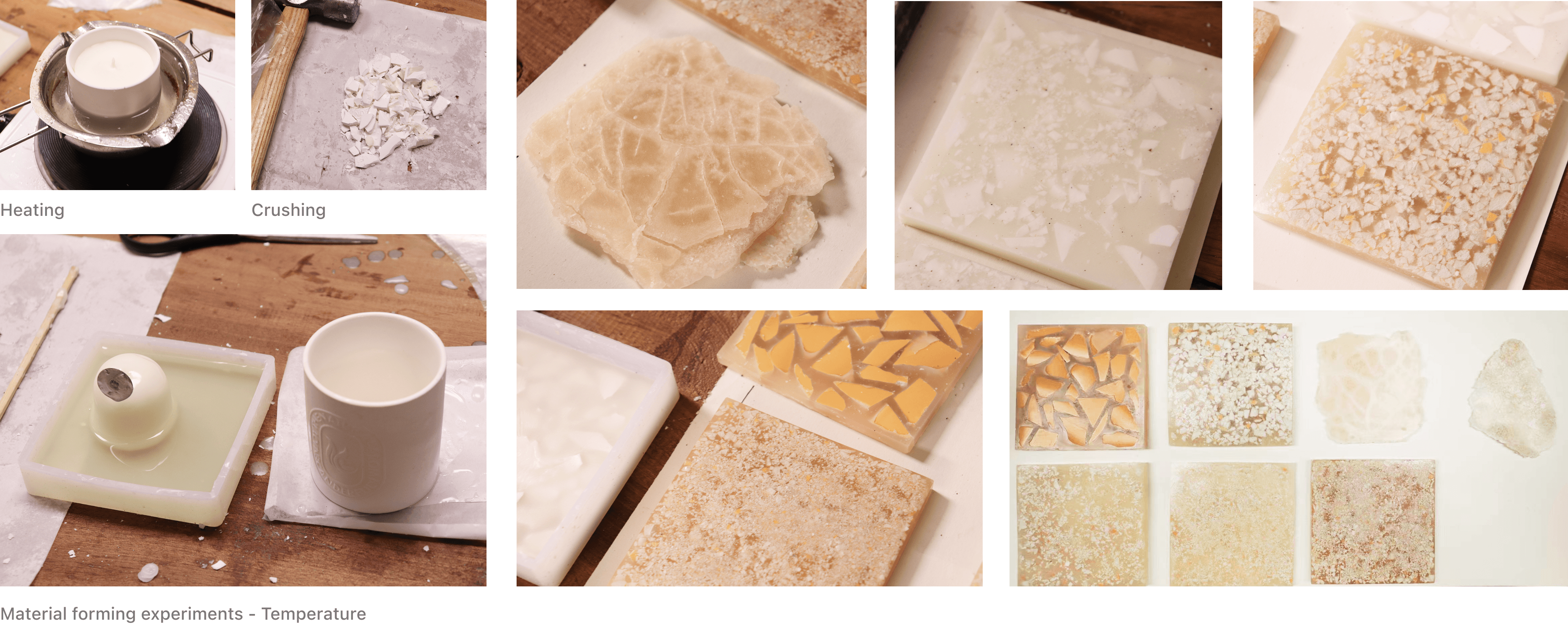
Based on the direct crushing pathway for material recovery, we conducted material forming experiments using the recovered feedstock and explored the core opportunity spaces for upcycled product design.
Through our investigation, we found that the product contains a 3:7 ratio of plant-based wax to mineral wax. Experimental results showed that wax with this composition is soft and difficult to form.
To address this limitation, we explored the incorporation of ceramic particles of varying sizes, as well as adjustments to the proportion of mineral wax.
Results
Suited for forming products with relatively small volumes, this remanufactured material is well adapted to controlled, low-temperature molding processes.
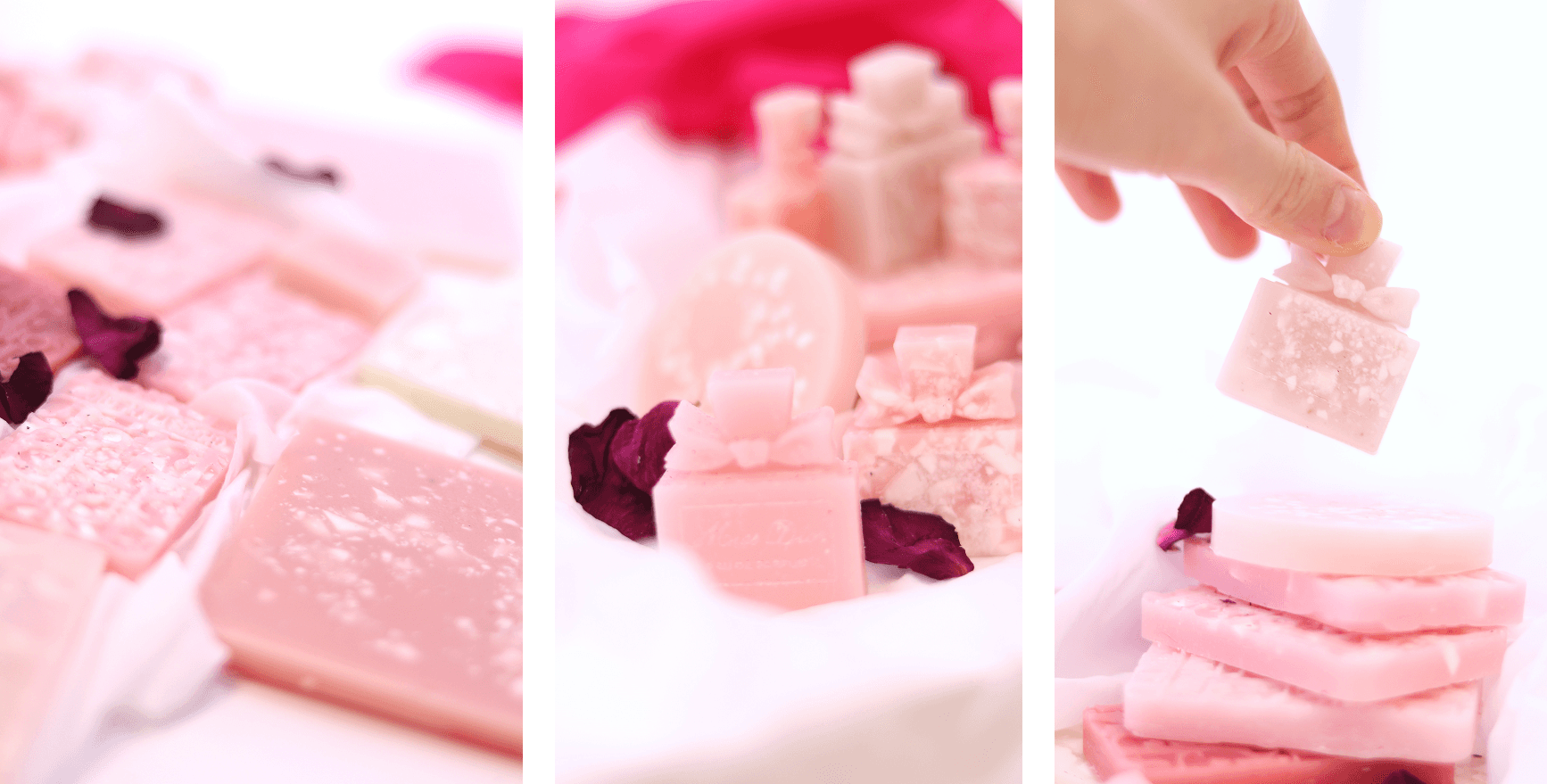
The material retains its original fragrance properties, making it particularly suitable for scented objects, event giveaways, and experiential brand applications.
Upcycling Products Design
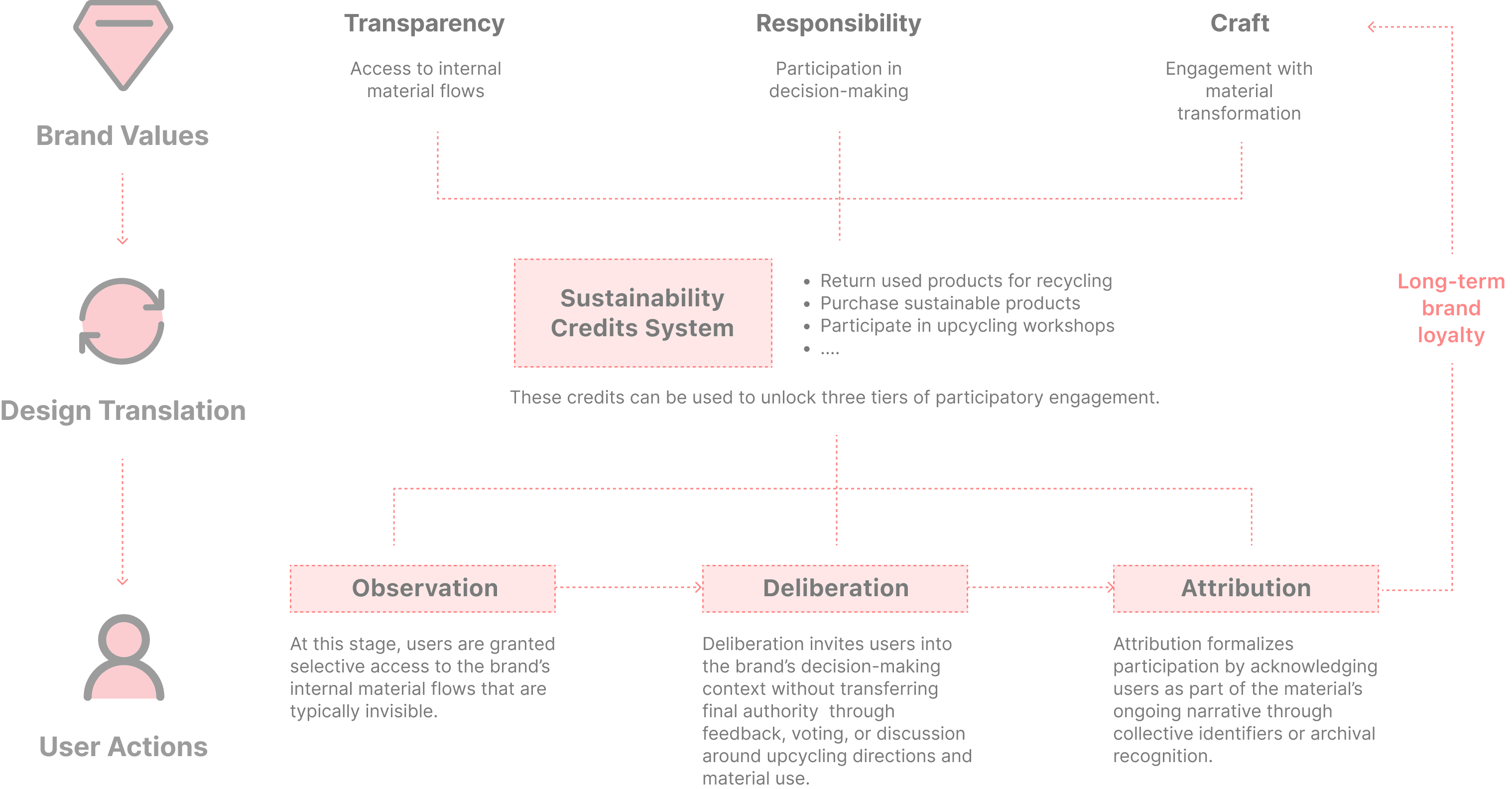
Reframing Circularity as Brand Participation Infrastructure
Our design evolves from an invitation-based workshop mechanism to a system-based participation model. To support long-term brand credibility and meaningful user involvement, we redesigned the process as a participation infrastructure that enables sustained interaction, transparency, and co-creation over time.